Own generation
Rooftop solar can let the property produce electricity on-site instead of only buying power from the grid.
Core manifesto episode
In the SolarTrading comedy, Mr. Barrelton thinks energy belongs to wells, tankers, refineries, and monopolies. Solar Sensei points to the roof and says: “The customer can own part of the power story.”
The main idea
SolarTrading.com uses comedy to explain a serious shift: with solar and batteries, the customer is not only a passive buyer of electricity. The customer may own generation, influence timing, support critical loads, and understand the bill more clearly.
Rooftop solar can let the property produce electricity on-site instead of only buying power from the grid.
Energy decisions become more meaningful when rates, loads, solar production, and battery behavior are understood together.
Batteries can add timing control and backup design possibilities, but they require realistic engineering and expectations.
Customer-owned power can help support selected critical loads during outages when properly designed and permitted.
The comedy contrast
The old customer waits for the bill. The power participant asks what the site can produce, what the loads need, and when the expensive hours attack.
The customer receives power, receives the bill, complains, and hopes next month is better. Madame Peak Rate loves this customer.
The customer studies the roof, the bill, the load profile, storage options, backup needs, and the practical limits of the site.
Manga scenes
The comedy is that the old oil executive keeps looking for distant energy assets while the most obvious one is above the customer’s head.
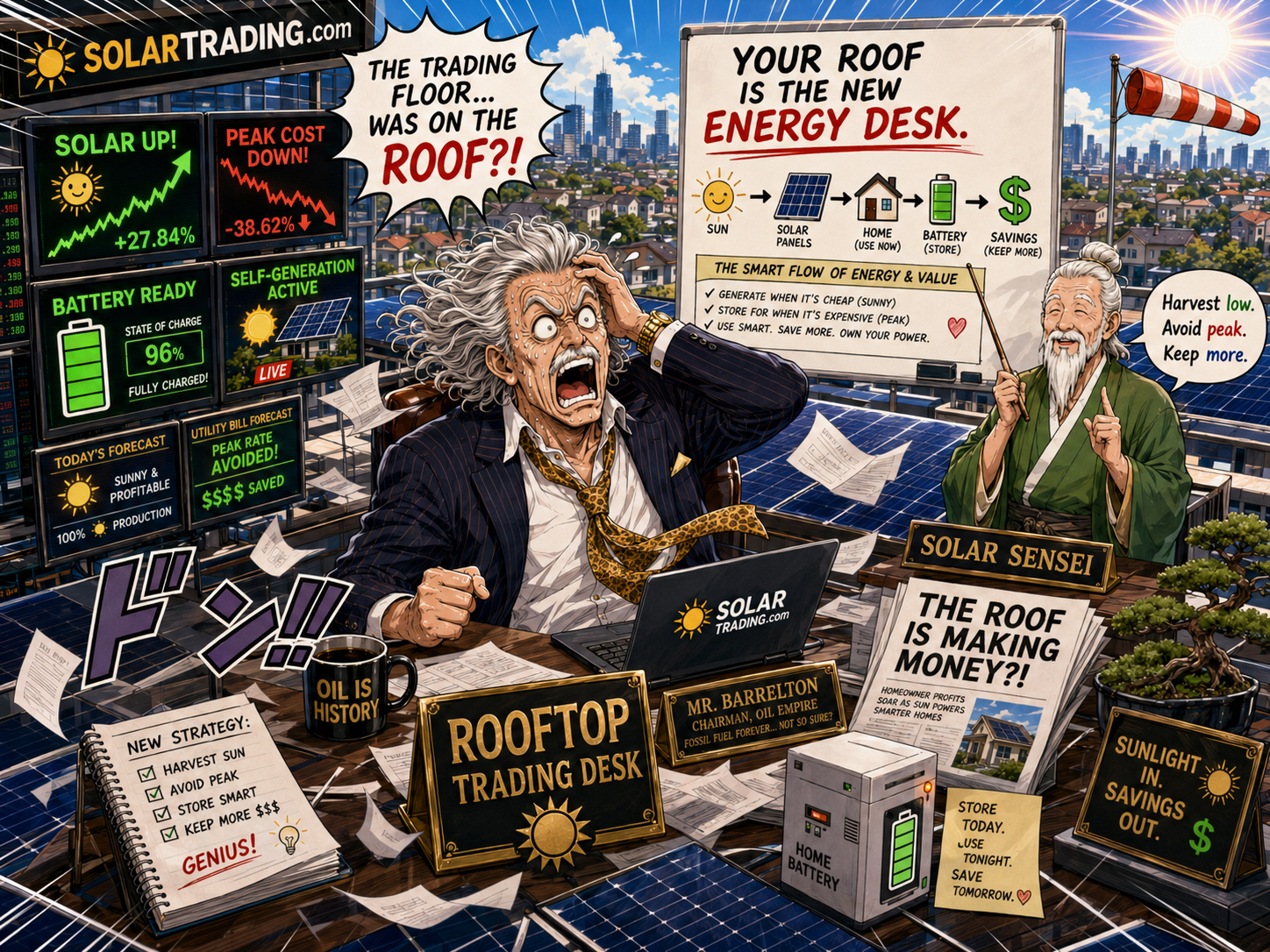
Mr. Barrelton asks where the supply chain is. Solar Sensei points up. Mr. Barrelton says, “That is a roof.”
Solar Sensei replies, “Exactly. You are beginning to understand.”

Oil Bear demands a tanker. Battery Bull asks for a load profile. Madame Peak Rate checks the clock and frowns.
The customer is no longer asleep. That ruins the villain’s day.
Honest limits
The page stays credible by saying what solar and batteries are not: they are not guaranteed savings, not free unlimited power, not automatic whole-house backup, and not a substitute for professional design.
Solar economics depend on site conditions, utility rates, usage, incentives, equipment, financing, and behavior.
Batteries have capacity limits. Backup design depends on selected loads, battery size, inverter limits, and recharge conditions.
Customer-owned power must be designed, permitted, interconnected, installed, and inspected according to applicable rules.
Solar as Customer-Owned Power is the SolarTrading.com manifesto: when customers own generation, understand timing, consider batteries, and plan resilience, they stop being only the person who receives the bill. They become part of the power story.