kWh is amount
Energy is the total amount used over time. Solar Sensei calls it the “how much did you eat?” part of the bill.
Commercial bill boss fight
Mr. Barrelton thought peak rates were dramatic. Then Solar Sensei showed him a commercial bill where one ugly demand spike can sit on the statement like a heavyweight champion.
Commercial bill comedy
This page uses demand charges as a manga villain because they are often misunderstood. Energy use is about total kWh. Demand is about how hard the business pulls power during a measured interval. The exact rules depend on the utility tariff.
Energy is the total amount used over time. Solar Sensei calls it the “how much did you eat?” part of the bill.
Demand is about the power level reached during a billing measurement window. Mr. Barrelton calls it the “how loud did you scream?” number.
A short period of high load may affect the bill depending on the tariff. The boss villain does not need to stay long.
Solar, batteries, controls, operating schedules, and load planning need careful commercial design and utility review.
The boss fight
In the manga, the warehouse turns everything on at once. The demand-charge boss villain wakes up, cracks his knuckles, and stamps the bill.
HVAC, compressors, pumps, chargers, ovens, motors, and equipment all wake up together. The meter sees a spike. The bill remembers.
The business studies load behavior, rate structure, operating schedules, solar production, storage options, and backup needs before pretending the problem is simple.
Manga scenes
The scene is funny because every machine thinks it is the main character. Then the meter records the group performance.
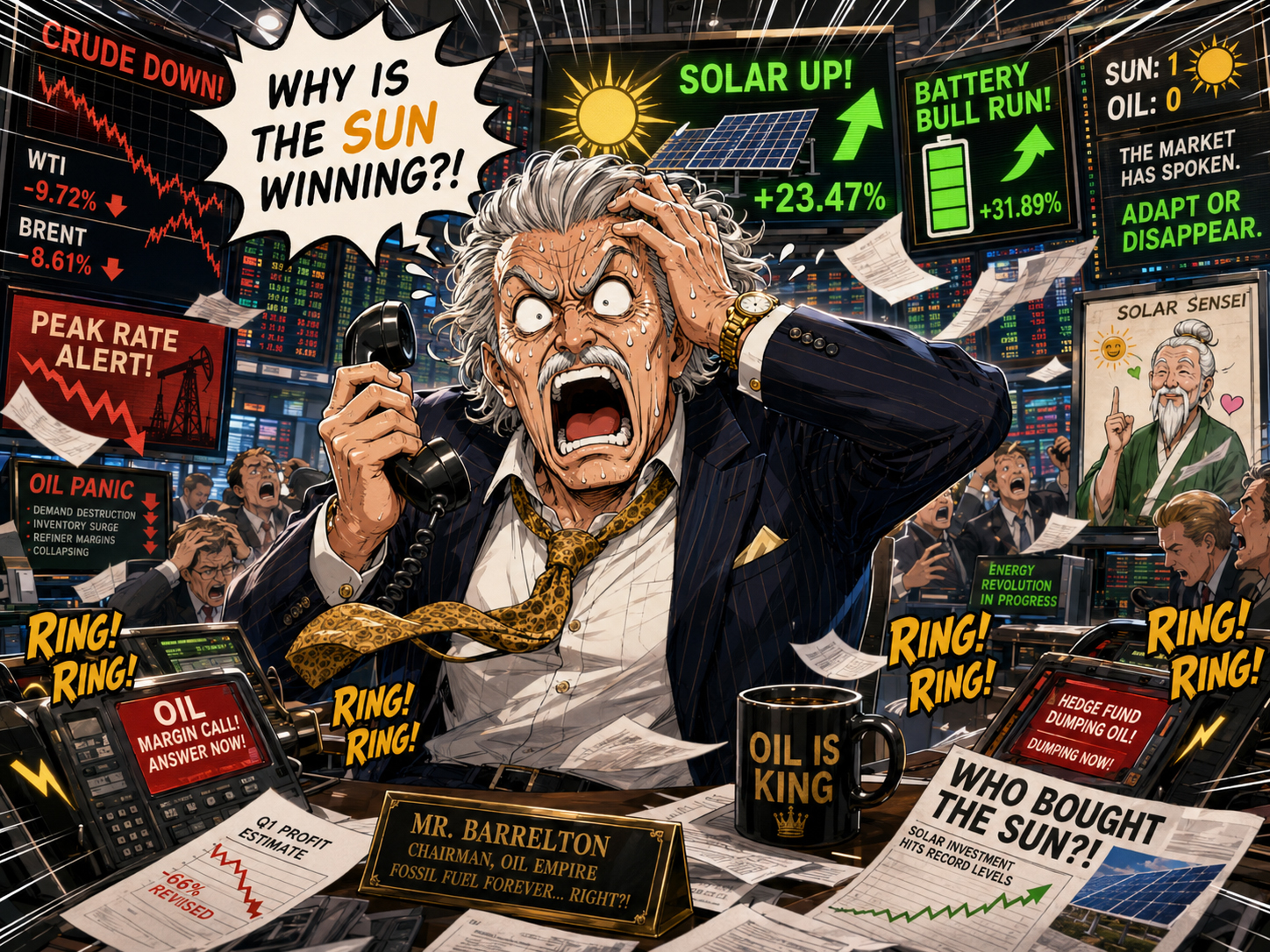
He understands oil price volatility. He understands futures charts. He does not understand why one warehouse spike looks like a villain signature.
Solar Sensei circles the demand line. “This is not a typo. This is a lesson.”
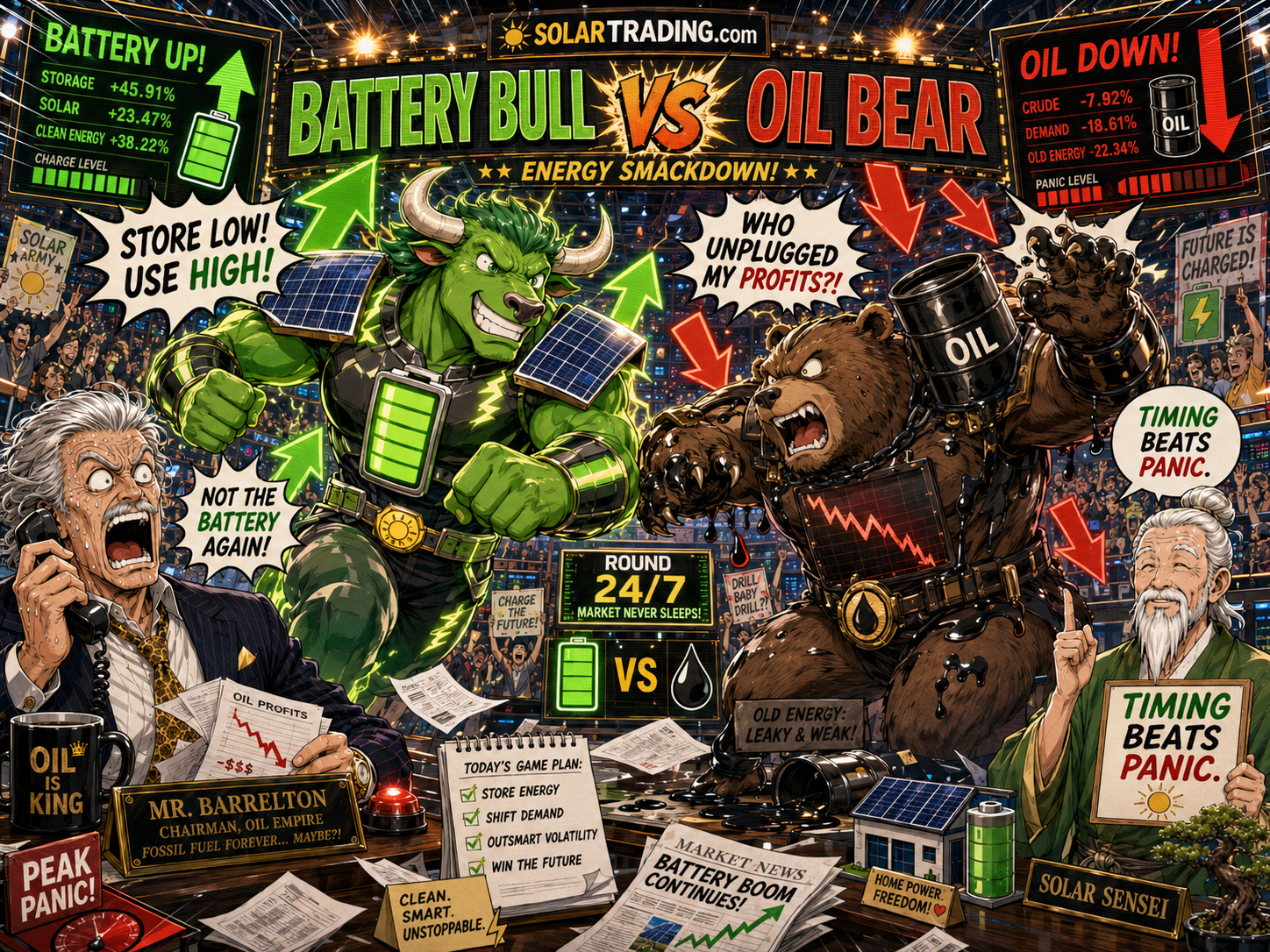
Oil Bear wants another barrel. Battery Bull wants interval data. The room goes quiet because “interval data” sounds like homework.
Utility Goblin appears with a clipboard and smiles too much.
Practical commercial lesson
This is the honest commercial message: demand charges require analysis. Solar may reduce energy usage from the grid, but demand charges depend on how the tariff measures power draw. Batteries or controls may help in some designs, but every site is different.
Commercial bills can include energy charges, demand charges, riders, taxes, and other tariff items.
Equipment behavior matters. Motors, HVAC, pumps, ovens, chargers, and production schedules can shape demand.
Solar, batteries, backup, controls, interconnection, and permitting need to work as one system.
Business Solar and Demand Charges is the SolarTrading.com way of explaining commercial energy complexity: solar can help with energy, batteries may help with timing and resilience, but demand charges require real analysis, not cartoon confidence.