Usage
The bill begins with how much energy was used. Mr. Barrelton calls this the “volume report.” Solar Sensei calls it kWh.
The real market report
Mr. Barrelton thought the action was in crude futures. Then Solar Sensei slid an electric bill across the desk and showed him the real exchange: usage, timing, rates, batteries, and a meter that never sleeps.
The hidden exchange
SolarTrading.com treats the utility bill like a comic-book trading floor because that is where the drama happens. The customer sees usage, time, rate schedules, demand, fees, and the final number that makes everyone yell.
The bill begins with how much energy was used. Mr. Barrelton calls this the “volume report.” Solar Sensei calls it kWh.
Electricity is not just what you use. It is when you use it. This is where Madame Peak Rate enters the room.
Batteries do not create sunlight. They help decide when stored power can be useful. Battery Bull calls this “waiting for the villain.”
Customer-owned power changes the psychology of the bill. The customer stops being only a buyer and becomes part of the strategy.
The trading-floor comedy
In the manga world, peak pricing is not a line item. It is a villain entrance. The room darkens. The utility bill cape appears. The meter starts sweating.
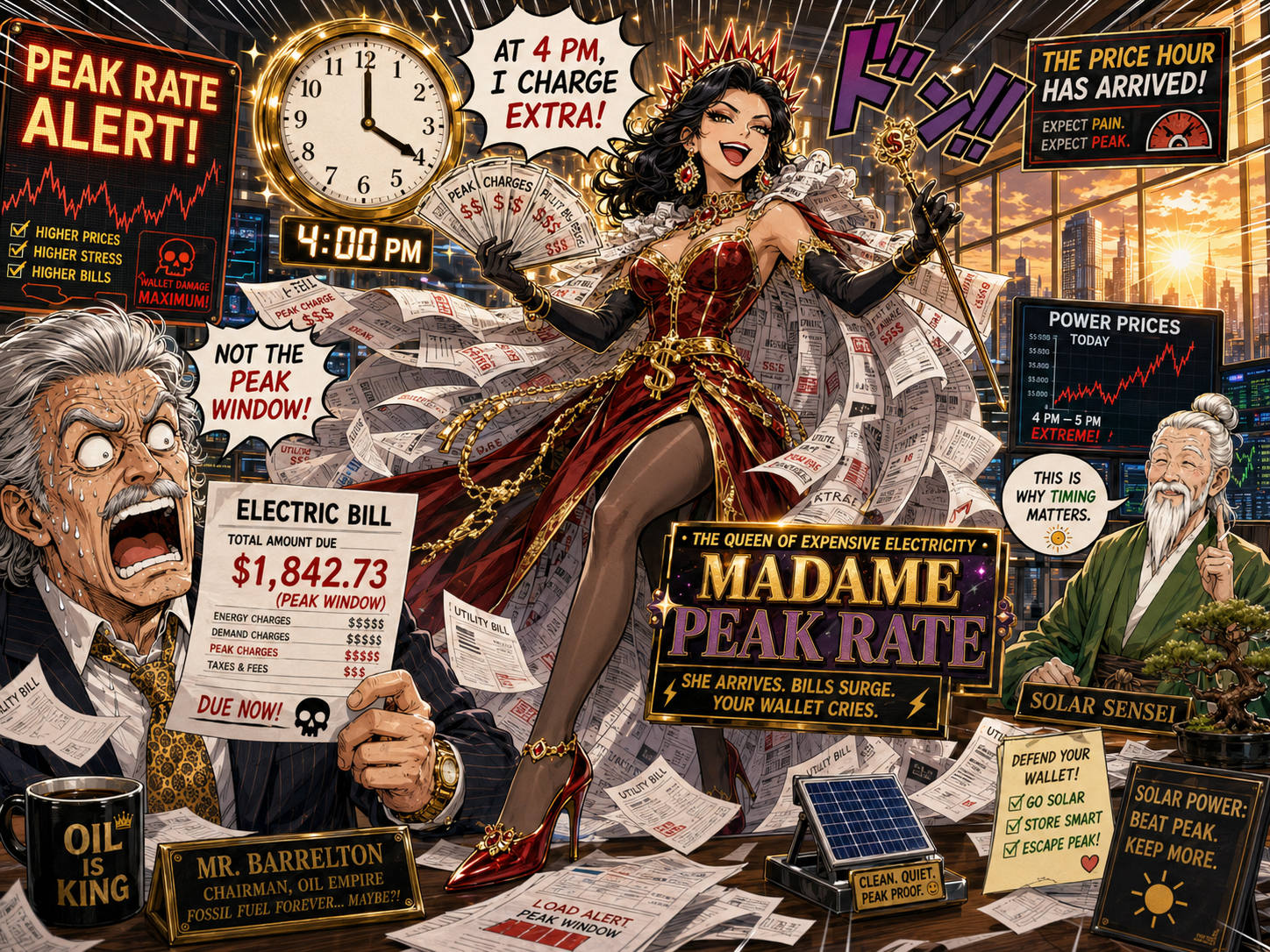
She does not need a refinery. She does not need a tanker. She only needs the wrong load at the wrong hour.
Air conditioning, pool pumps, EV charging, cooking, lighting — all of it becomes comedy ammunition when timing is ignored.
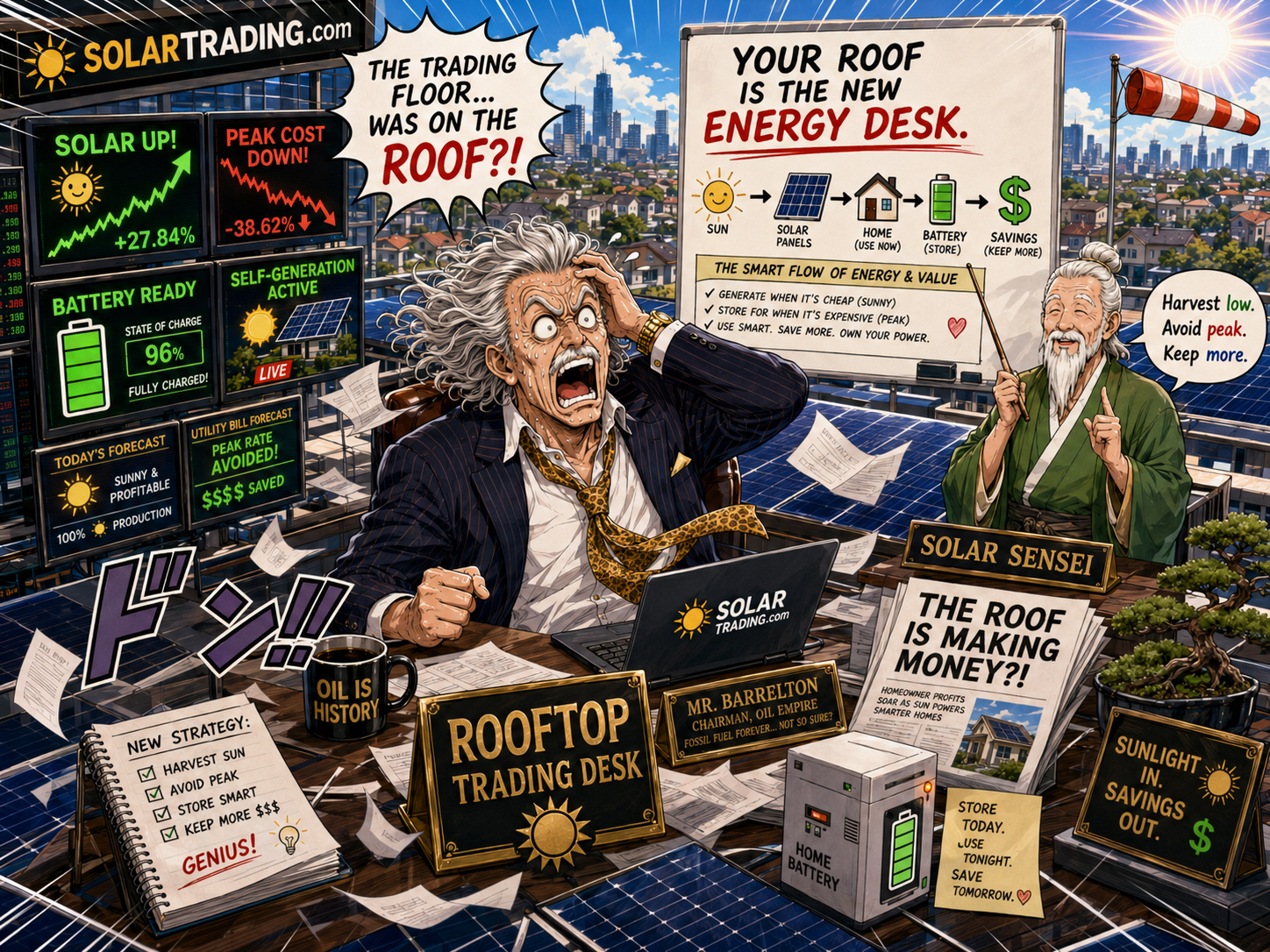
Solar Sensei points upward. Mr. Barrelton looks confused. “That is not a trading desk,” he says.
Then the panels produce, the battery waits, and the meter stops looking so invincible.
How to read the comedy
The page does not give utility-rate advice. It gives the reader a funny mental model: your bill is where load, timing, rate structure, and energy behavior collide.
These are the parts of the bill that feel like ambushes.
These are the choices that make Solar Sensei start drawing arrows.
These are the practical ideas that make Mr. Barrelton slowly believe.
The Utility Bill Trading Floor is the SolarTrading.com way of making energy strategy visual: the meter tells the story, the rate schedule sets the trap, the battery waits for the fight, and customer-owned power changes the script.