The clock becomes a monster
Mr. Barrelton can understand oil shocks. He cannot accept that a clock on the wall can make electricity feel expensive.
Madame Peak Rate episode
Madame Peak Rate does not kick down the door. She waits until 4 p.m., smiles through the meter, and turns ordinary electricity use into a comic-book ambush.
The joke
This page uses the word “arbitrage” as comedy shorthand for timing awareness. It is not investment advice, trading advice, or a promise of savings. The useful idea is simple: when rates vary by time, timing becomes part of the energy story.
Mr. Barrelton can understand oil shocks. He cannot accept that a clock on the wall can make electricity feel expensive.
She does not need a tanker. She just waits for everyone to come home, turn things on, and ignore the schedule.
The battery does not panic. It stores energy and waits for the villain’s big entrance.
Production, storage, load, timing. Mr. Barrelton calls it witchcraft. Solar Sensei calls it a diagram.
The showdown
In the manga, the customer is not trying to become a commodity trader. The customer is trying not to let Madame Peak Rate choose the worst possible moment.
Everything turns on at the worst time. The meter spins. The bill laughs. Mr. Barrelton starts calling lawyers.
Solar production, battery storage, and load awareness work together. The meter still matters, but the customer is no longer asleep.
Manga scenes
The best character is the villain who shows up on schedule. She is predictable. She is expensive. She is fabulous. And Battery Bull knows she is coming.
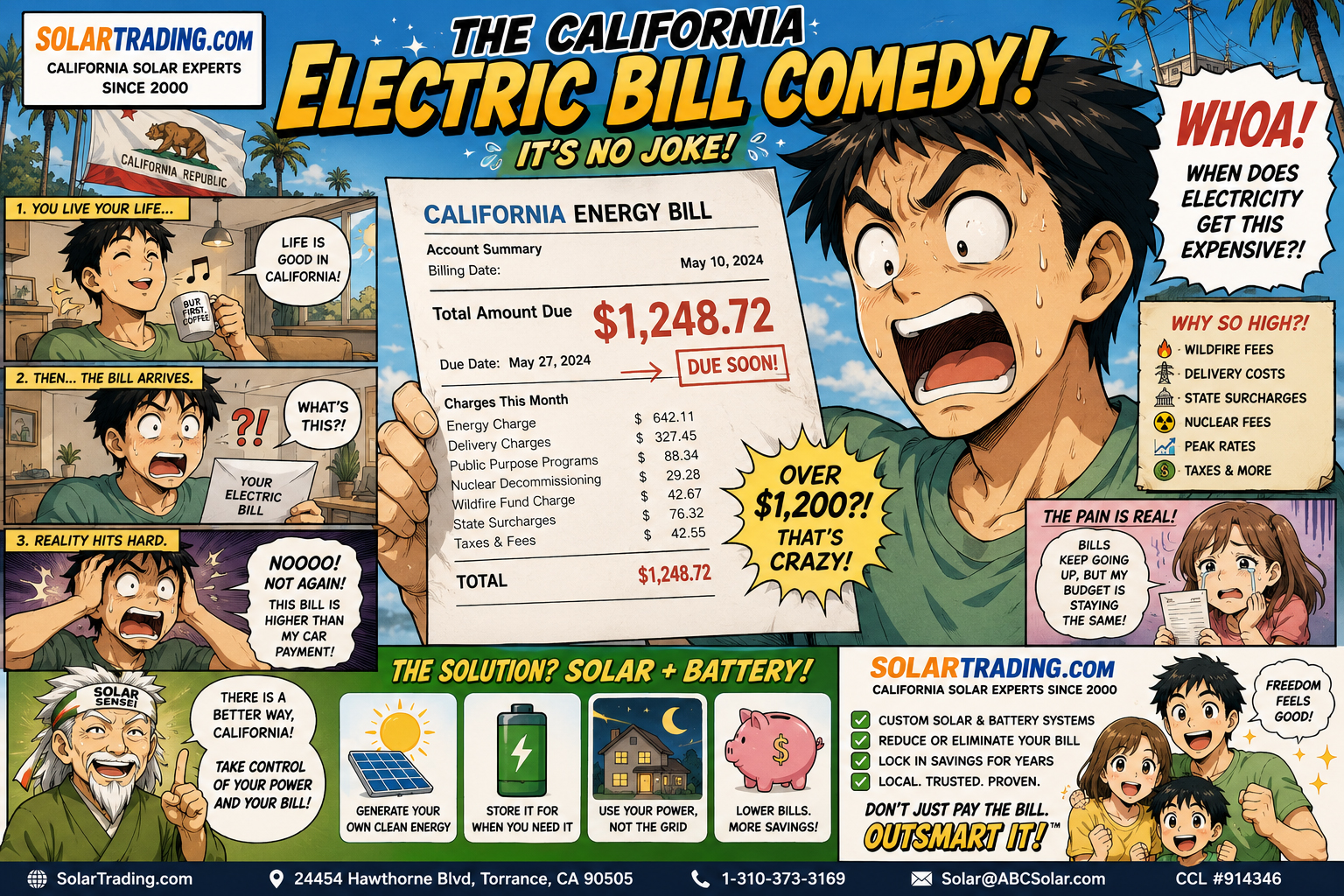
Mr. Barrelton opens the bill and demands to know who authorized the attack. The utility bill says nothing. It just glows.
Solar Sensei points to the clock. “The villain had an appointment.”
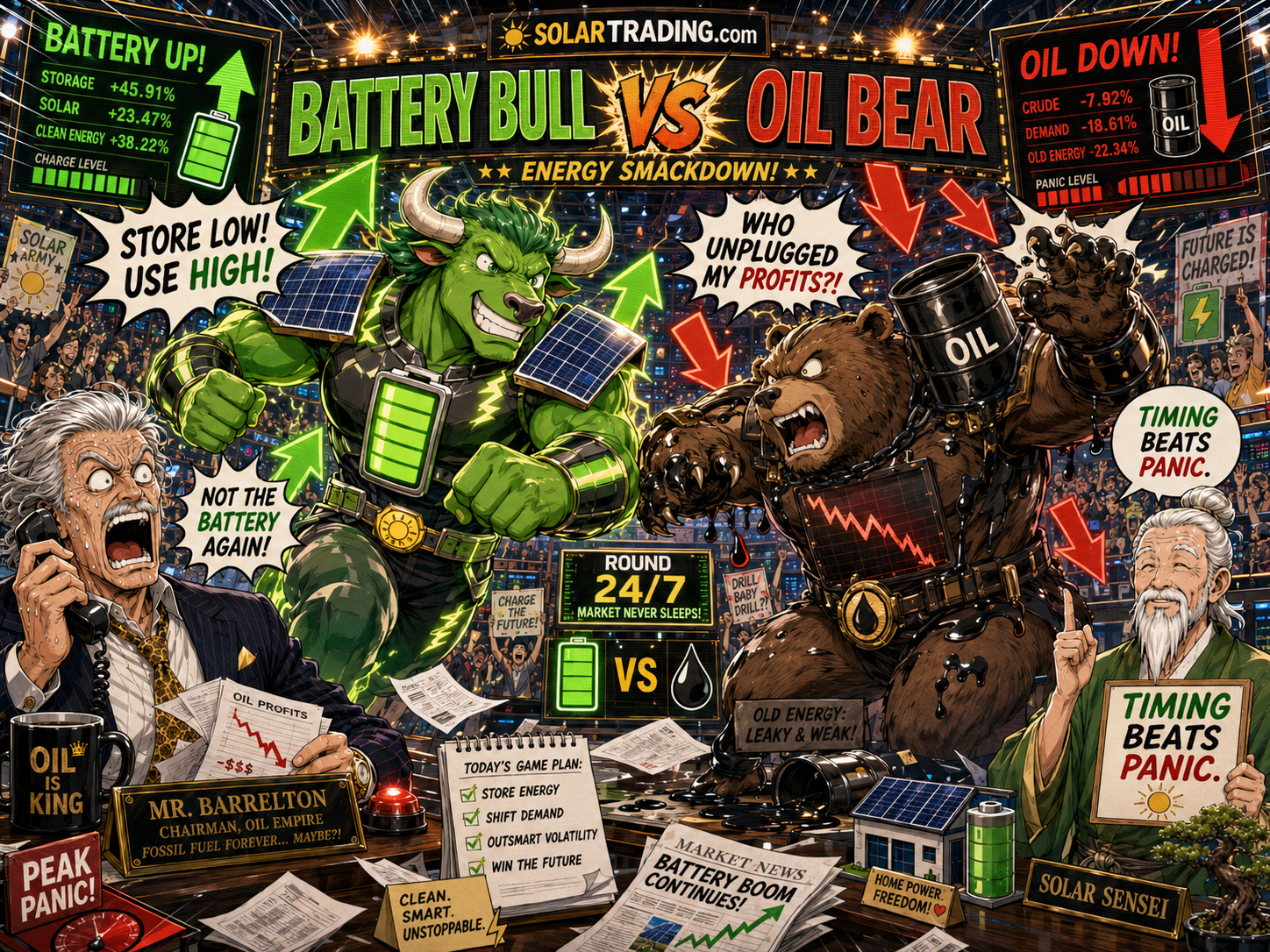
Oil Bear wants more barrels. Battery Bull wants better timing. Mr. Barrelton realizes the fight is not just about energy quantity.
It is about when energy is useful, when it is expensive, and who is paying attention.
The practical lesson
SolarTrading.com keeps the lesson safe: no guarantees, no financial advice, no fake certainty. Just a better way to visualize why solar and batteries are discussed together.
Electricity costs can depend on when power is used.
Solar gives the property a daytime production source.
Batteries add timing control and backup design possibilities.
Peak Rate Arbitrage Comedy is the SolarTrading.com way of saying: when the rate schedule becomes a villain, solar and batteries become characters in a timing story. The comedy is wild. The lesson is practical.