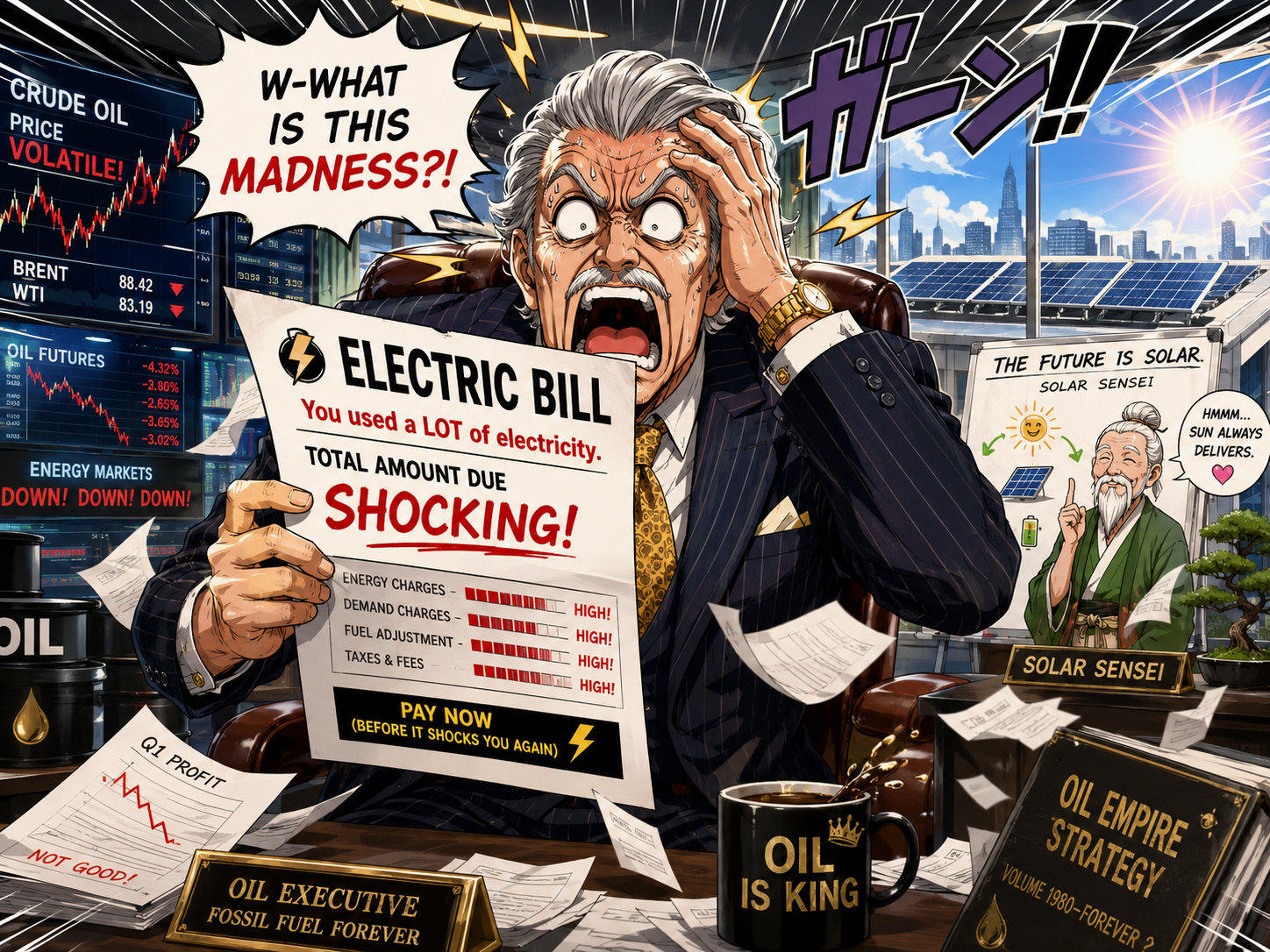
The bill hit first.
The first joke is simple: a man who survived the oil market is defeated by an electric bill. He wants a tanker, a futures desk, and someone to yell at.
Solar Sensei gives him something worse: a lesson.
About the manga comedy
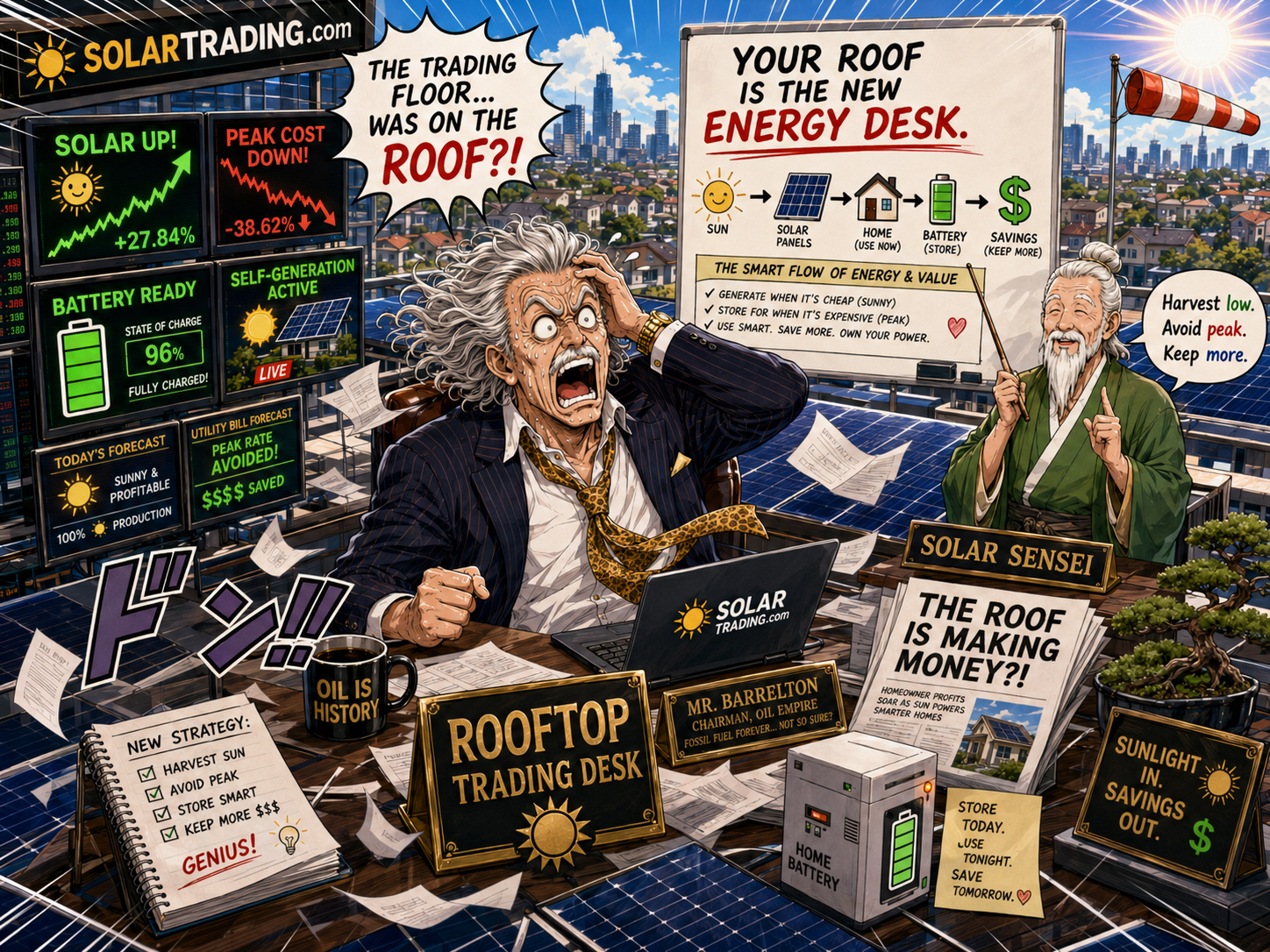
SolarTrading.com is a funny manga comedy about an oil executive who slowly discovers that the next energy story is not only about barrels. It is about roofs, meters, batteries, utility bills, peak rates, blackouts, EV charging, and customer-owned power.
The premise
Mr. Barrelton understands wells, tankers, refineries, charts, supply shocks, and crude-price panic. Then he sees a California electric bill and realizes the new energy villain may be hiding inside the rate schedule.
The first joke is simple: a man who survived the oil market is defeated by an electric bill. He wants a tanker, a futures desk, and someone to yell at.
Solar Sensei gives him something worse: a lesson.
SolarTrading.com uses “trading desk” as a metaphor for energy awareness: the roof, meter, battery, loads, rate schedule, and clock all matter.
It is not financial advice. It is a cartoon way to explain why energy timing matters.
The cast
The characters make technical ideas memorable without pretending the work is simple.
Old-school oil executive. Three phones. One panic button. Slowly becoming a solar believer.
The calm teacher who explains kW, kWh, timing, batteries, and customer-owned power.
The glamorous villain who appears at expensive hours wearing a utility-bill cape.
The storage hero who knows that batteries are timing tools, not magic boxes.
The fossil-fuel instinct whispering, “But where are the barrels?”
The paperwork creature living inside forms, delays, missing boxes, and resubmissions.
Purpose
SolarTrading.com is built to be memorable, shareable, and funny while keeping the serious boundaries clear.
Utility bills can feel mysterious. The site turns usage, timing, demand, and rates into characters and scenes.
Batteries are not magic. Battery Bull helps readers remember capacity, timing, critical loads, and limits.
Customer-owned power means the customer may own part of the answer instead of only receiving the bill.
The site avoids overpromising: no savings guarantees, no trading advice, no engineering shortcuts.
The job is to make solar, batteries, peak rates, EV charging, demand charges, blackout resilience, and customer-owned power easier to understand — without pretending a manga joke replaces professional design, permits, utility review, or code-compliant installation.