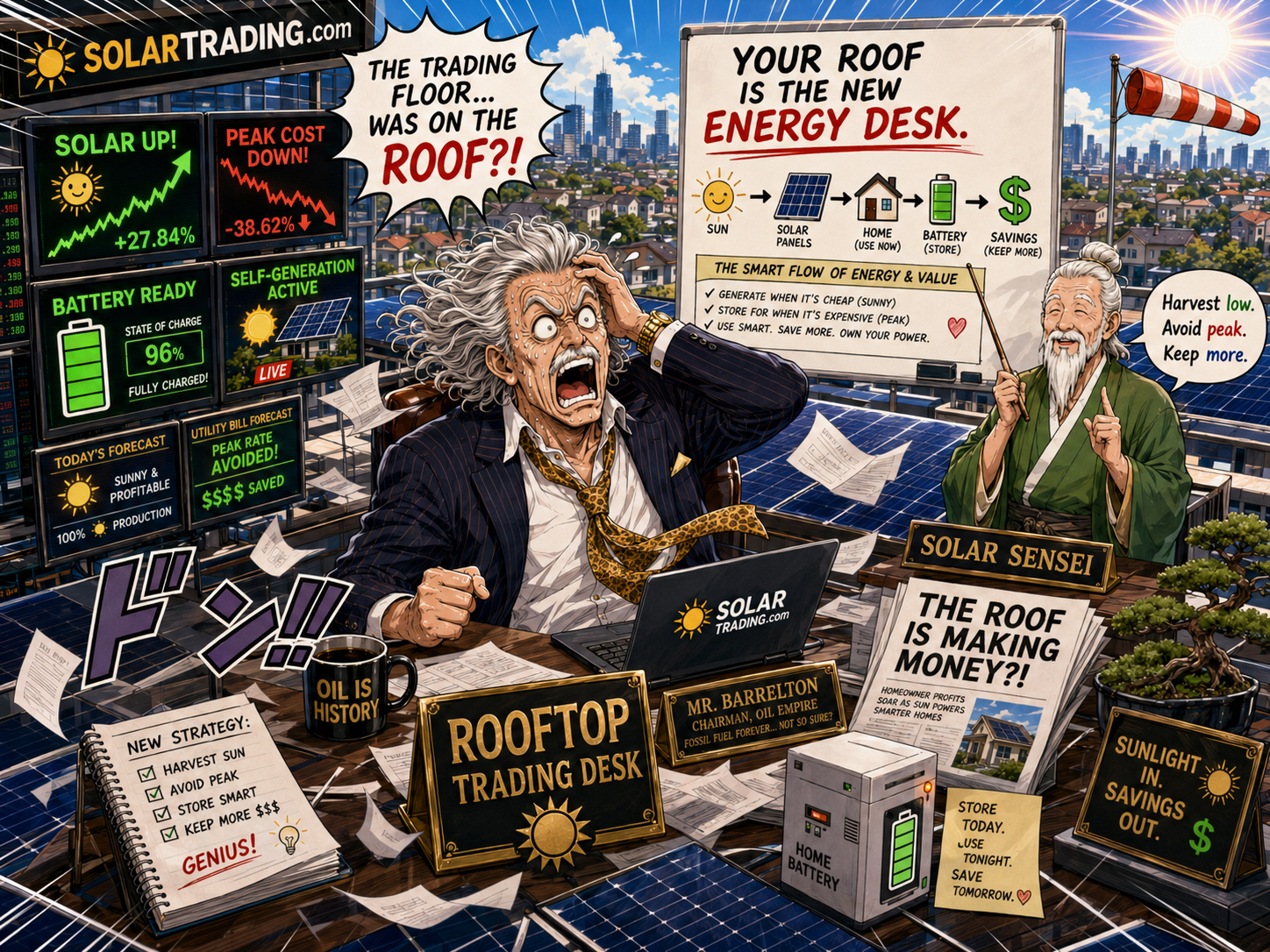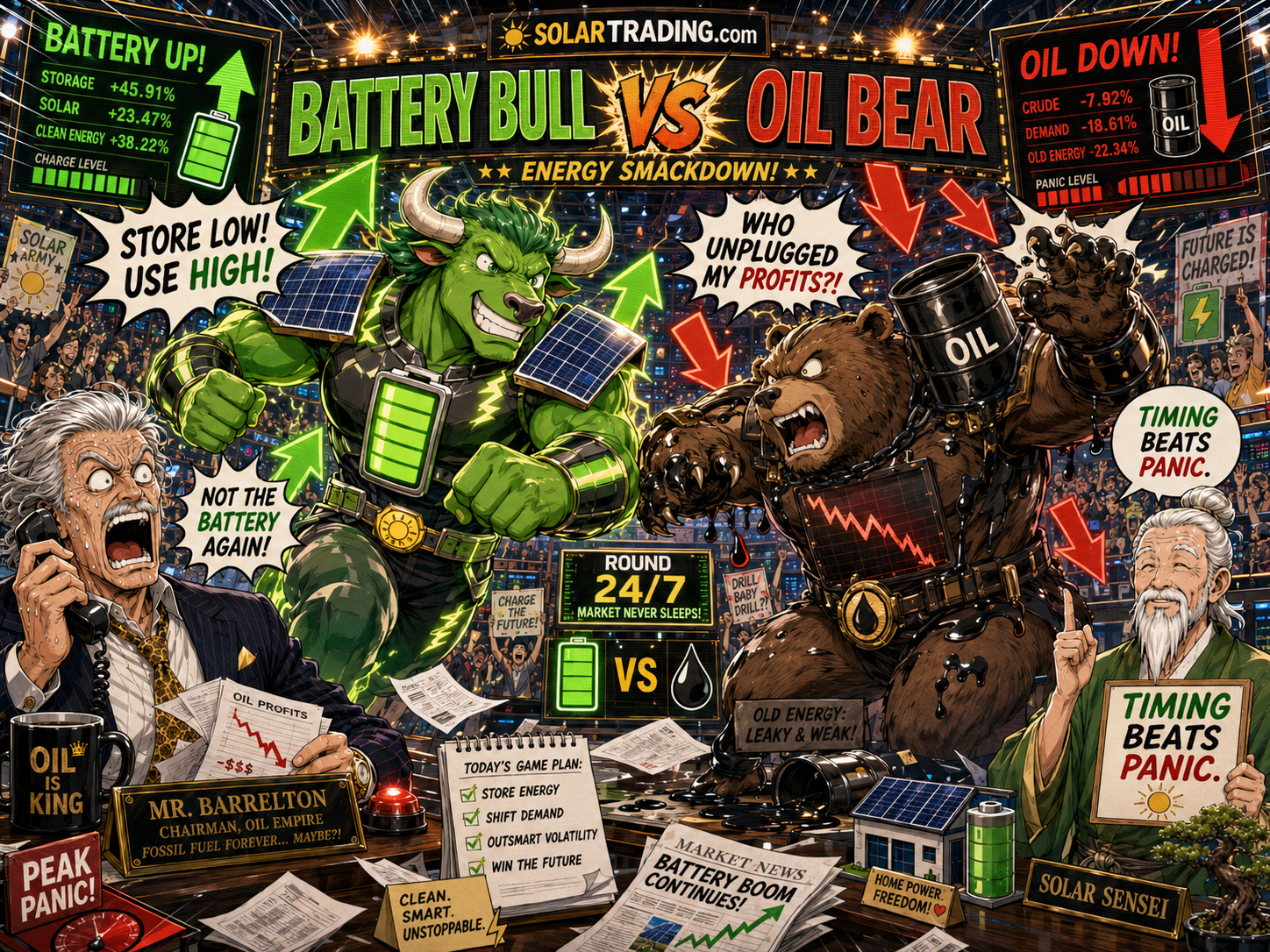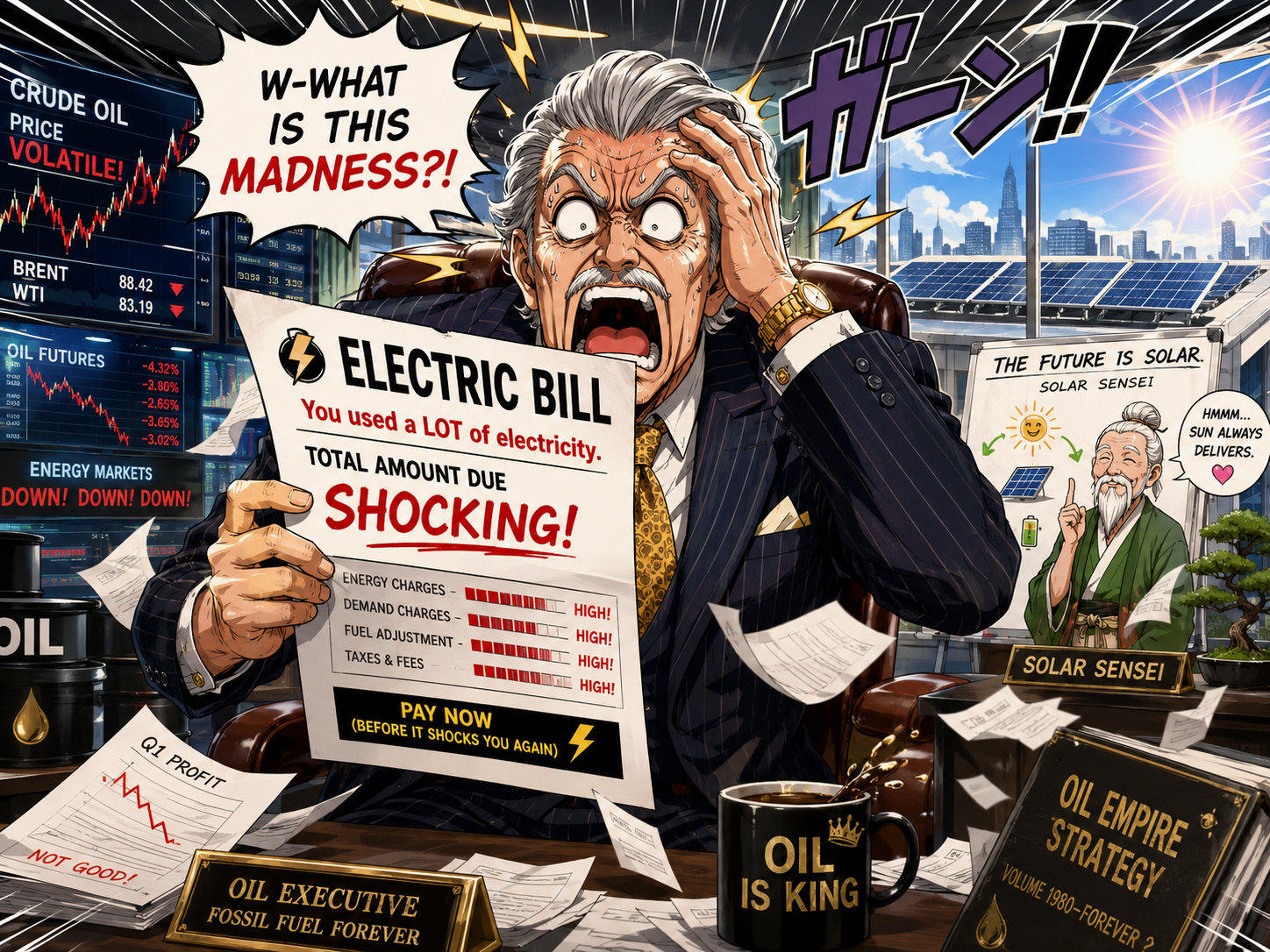
Episode 2 / villain entrance

Madame Peak Rate enters the room.

Mr. Barrelton thought the electric bill was the villain. Solar Sensei knows better. The bill is only the messenger. The true villain enters at the wrong hour.

Episode 2

The wrong hour puts on a crown.

This episode introduces the central villain of timing: Madame Peak Rate. She is not evil because electricity exists. She is evil because she waits until everybody needs it at once.

California electric bill comedy manga
Panel one

The boardroom blamed the bill.

Mr. Barrelton slammed the paper down. The traders stared at it like it had teeth. Oil Bear whispered that maybe the refrigerator had joined OPEC.

“Who did this? Who made electricity attack after lunch?”
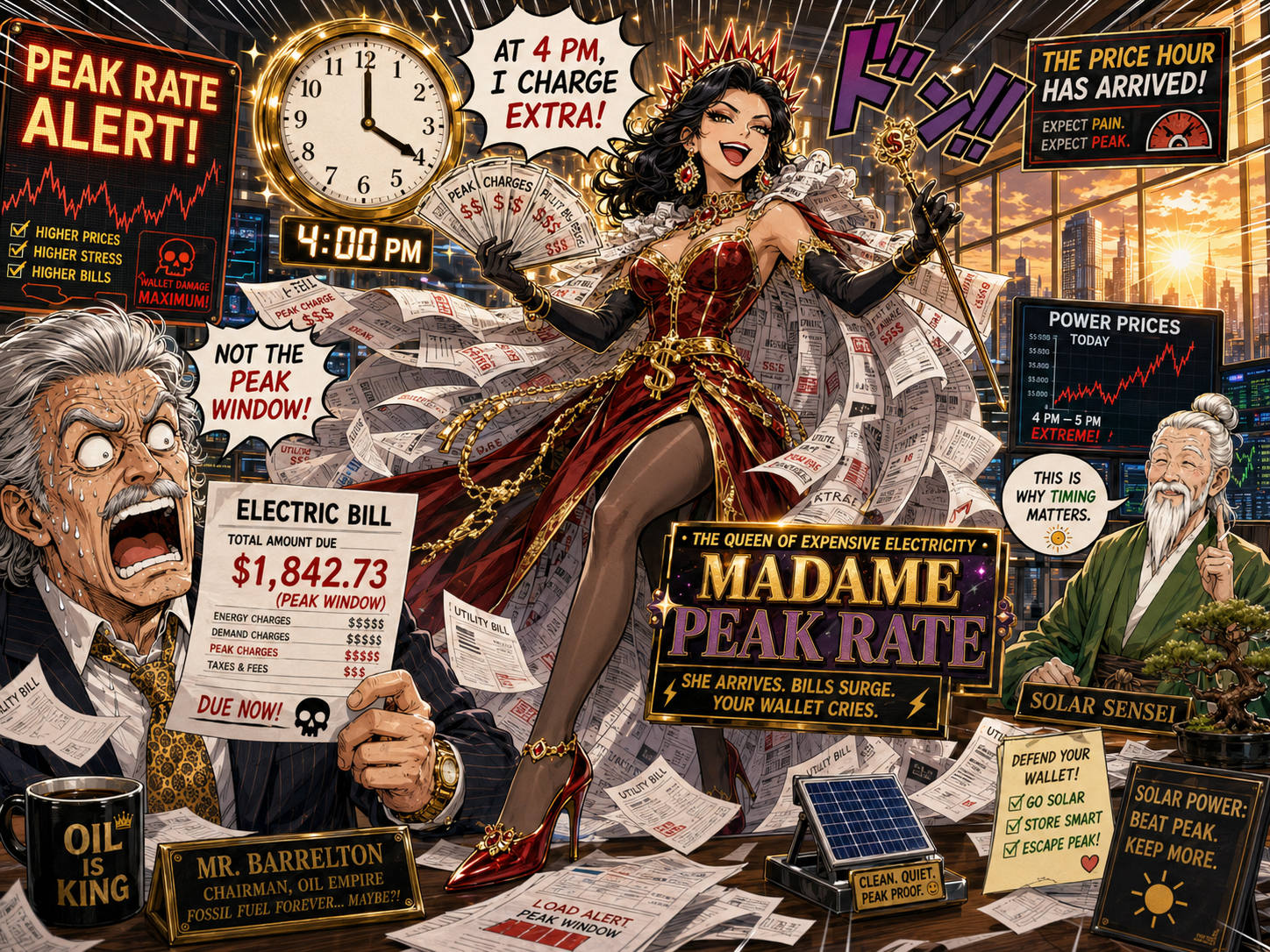
Madame Peak Rate enters the room
Panel two

Madame Peak Rate entered.

The lights flickered. The conference room door opened. She walked in wearing a cape made of utility bills and a crown shaped like a clock.

“Gentlemen, I do not need a tanker. I only need bad timing.”
Rooftop solar becomes the energy trading desk
Panel three

Solar Sensei pointed to the roof.

Mr. Barrelton demanded a market explanation. Solar Sensei drew three things: the roof, the load, and the clock.

“Energy is not only how much. Sometimes the fight is when.”
Battery Bull versus Oil Bear manga showdown
Panel four

Battery Bull cracked his knuckles.

Oil Bear backed away. Battery Bull stepped forward. He did not promise miracles. He only said he had been watching the clock.

“Madame Peak Rate loves surprises. I love schedules.”

What Episode 2 teaches

Peak rates make timing visible.

The lesson is not that every customer should panic about every hour. The lesson is that when rates vary by time, solar, batteries, EV charging, HVAC, and major loads need to be understood together.

The clock matters

Time-of-use structures can make the timing of electricity use important.

  • Peak periods
  • Rate schedules
  • Load timing
  • Usage behavior

Solar has timing

Solar production depends on sunlight, weather, roof orientation, system size, and season.

  • Daytime production
  • Seasonal output
  • Shading
  • Export rules

Batteries add timing

Storage can help with timing and backup design, but it must be properly sized and engineered.

  • Battery capacity
  • Discharge strategy
  • Critical loads
  • Code compliance
“The villain is not electricity,” Solar Sensei said. “The villain is ignoring the clock.”

Episode 2 turns a rate schedule into a villain.

Madame Peak Rate makes the SolarTrading.com lesson unforgettable: the modern energy story is not only about how much power a customer uses. It is also about when power is produced, stored, and consumed.

Important: SolarTrading.com is fictional manga satire and educational commentary. It is not financial advice, commodity trading advice, investment advice, tax advice, legal advice, utility-rate advice, engineering advice, emergency advice, EV charging advice, construction advice, or a guarantee of savings, performance, incentives, rate outcomes, interconnection approval, backup duration, or resilience. Solar and battery systems require professional design, load calculations, permitting, interconnection review, inspections, and code-compliant installation.