Episode 1 / origin shock

The oil boss sees the electric bill.

Mr. Barrelton has survived crude crashes, tanker delays, refinery outages, and angry board meetings. Then a California electric bill lands on his desk and breaks his entire worldview.

Episode 1

The bill hits the table.

This episode introduces the central joke: the old oil executive understands energy markets, but he does not understand why a monthly utility bill feels like a hostile takeover.

Mr. Barrelton panics on the energy trading floor
Panel one

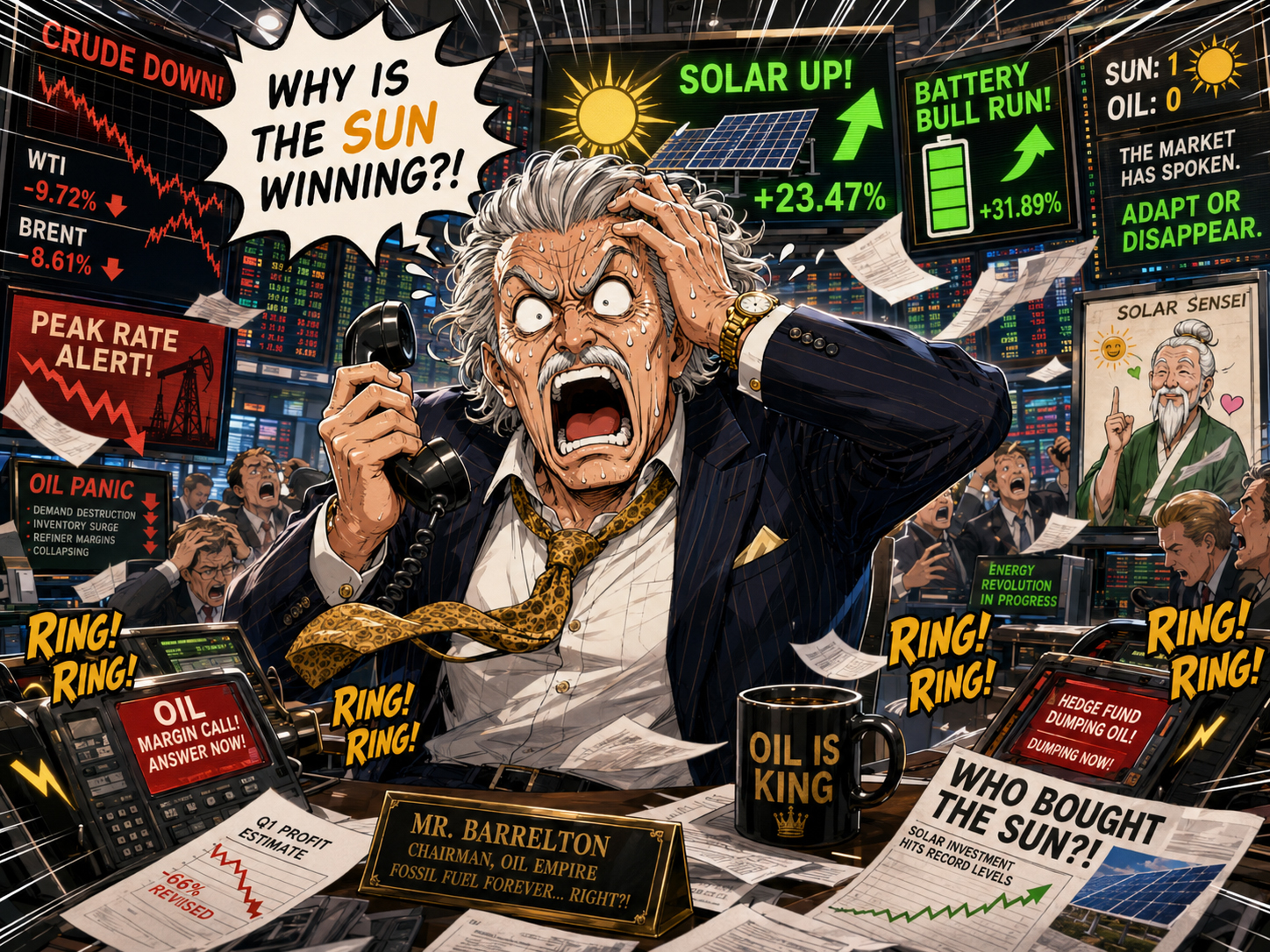
The oil floor was loud.

Phones rang. Screens flashed. Traders shouted numbers that sounded important. Mr. Barrelton stood in the center like a general of fossil-fuel chaos.

“Crude is up! Tankers are late! Someone find me a chart with more red arrows!”
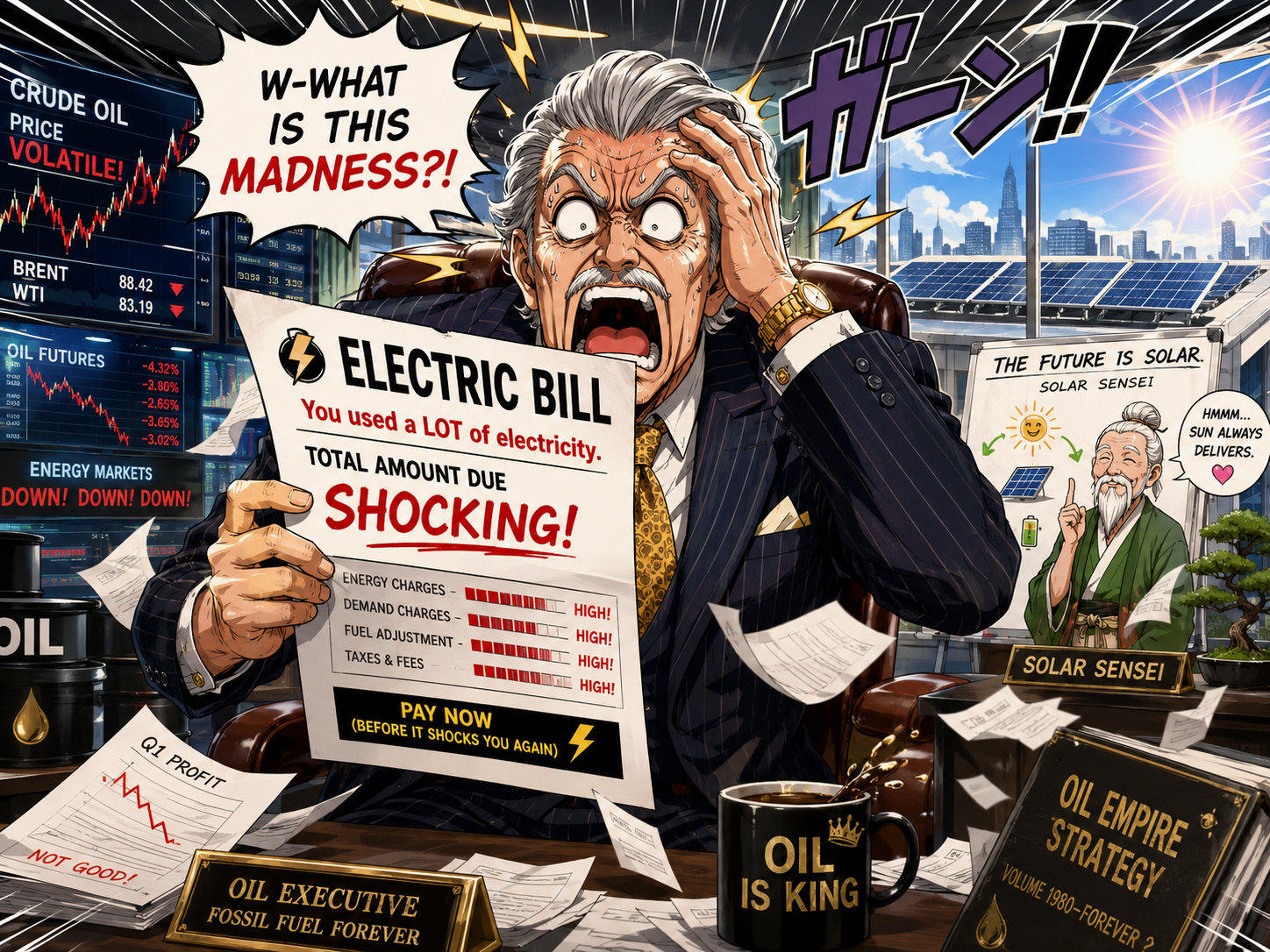
Oil executive sees an electric bill
Panel two

Then the electric bill arrived.

An assistant placed the envelope on the table. It was ordinary paper. Yet somehow, it felt heavier than a barrel.

“This is not a bill. This is an acquisition attempt.”
California electric bill comedy scene
Panel three

The numbers started yelling.

Mr. Barrelton understood commodity volatility. He understood freight costs. He understood global supply risk. But this bill had no tanker, no refinery, and no villain he could call.

“Who do I yell at? Where is the futures desk for this refrigerator?”
Solar Sensei explains kilowatt-hours
Panel four

Solar Sensei enters quietly.

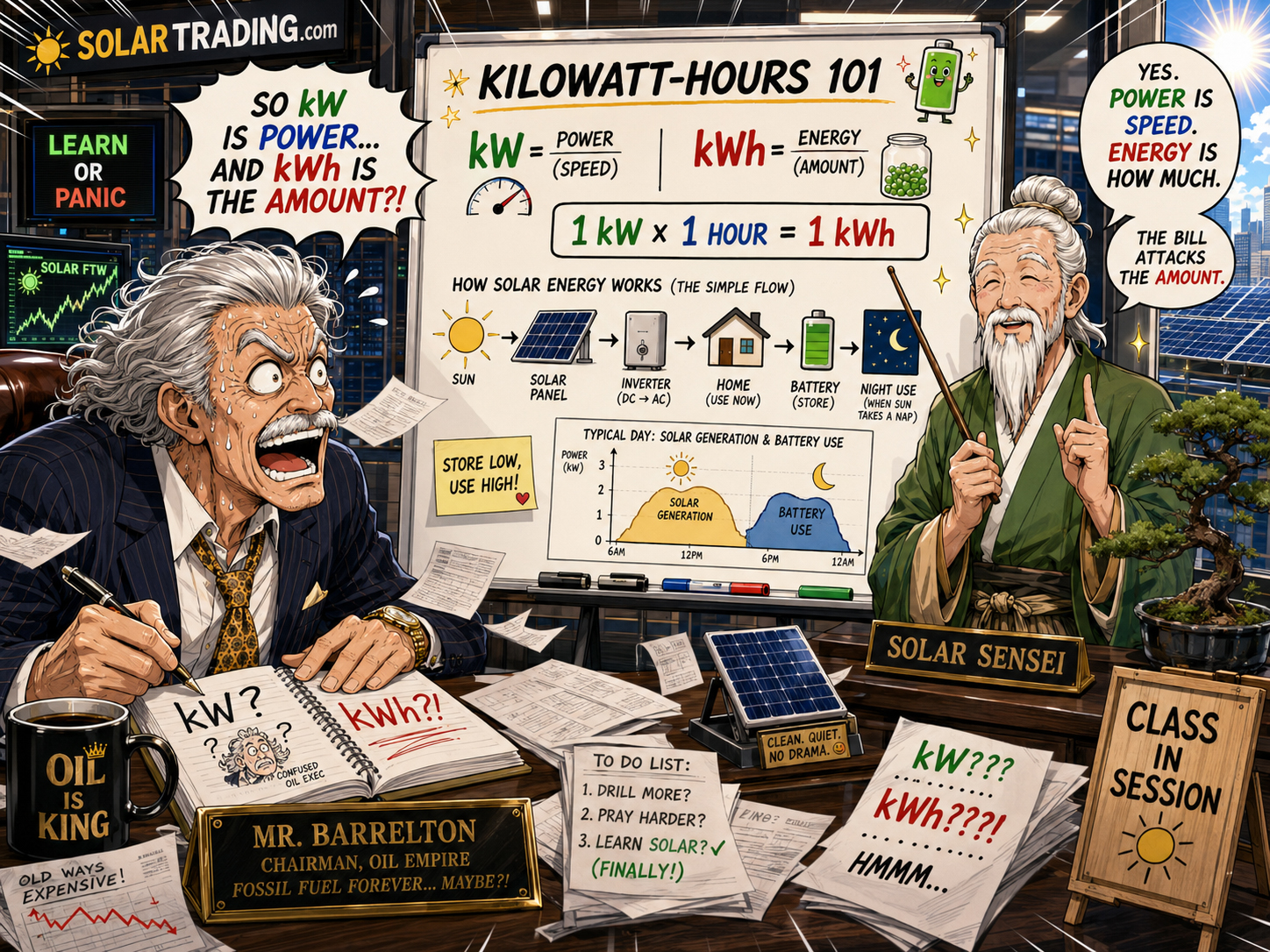
Solar Sensei did not yell. He did not call Houston. He drew two letters on the board: kW. Then he drew three: kWh.

“Before you panic, Mr. Barrelton, you must learn what the bill is actually measuring.”

What Episode 1 teaches

The bill is the first teacher.

The first lesson is not solar panels, batteries, or backup. The first lesson is reading the bill without pretending the bill is simple.

Energy amount

The bill reflects how much energy is used over time.

  • kWh matters
  • Usage patterns matter
  • Behavior matters
  • Equipment matters

Timing

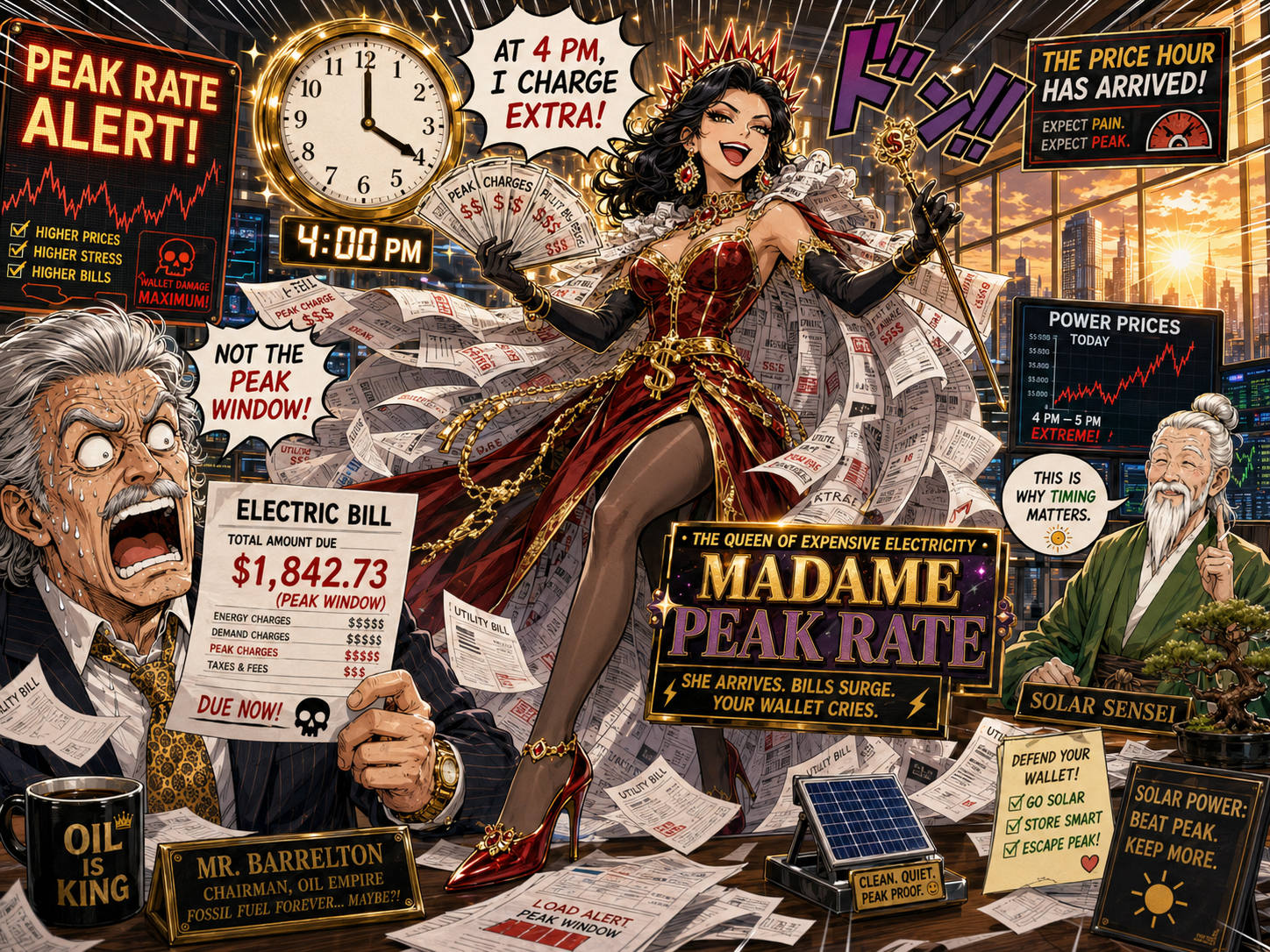
The same usage can feel different when rate schedules and peak periods are involved.

  • Time-of-use rates
  • Peak windows
  • Load timing
  • Customer awareness

Control

Solar and batteries enter the story only after the customer understands what the bill is doing.

  • Solar production
  • Storage options
  • Critical loads
  • System design
“The bill is not the end of the story,” Solar Sensei said. “It is the first page.”

Episode 1 begins with panic. The series begins with literacy.

Mr. Barrelton’s electric bill meltdown launches the SolarTrading.com story: an oil executive slowly learns that the modern energy battle is about usage, timing, solar generation, battery storage, resilience, and customer-owned power.

Important: SolarTrading.com is fictional manga satire and educational commentary. It is not financial advice, commodity trading advice, investment advice, tax advice, legal advice, utility-rate advice, engineering advice, emergency advice, EV charging advice, construction advice, or a guarantee of savings, performance, incentives, rate outcomes, interconnection approval, backup duration, or resilience. Solar and battery systems require professional design, load calculations, permitting, interconnection review, inspections, and code-compliant installation.