Episode 4 / solar school

Solar Sensei explains kWh.

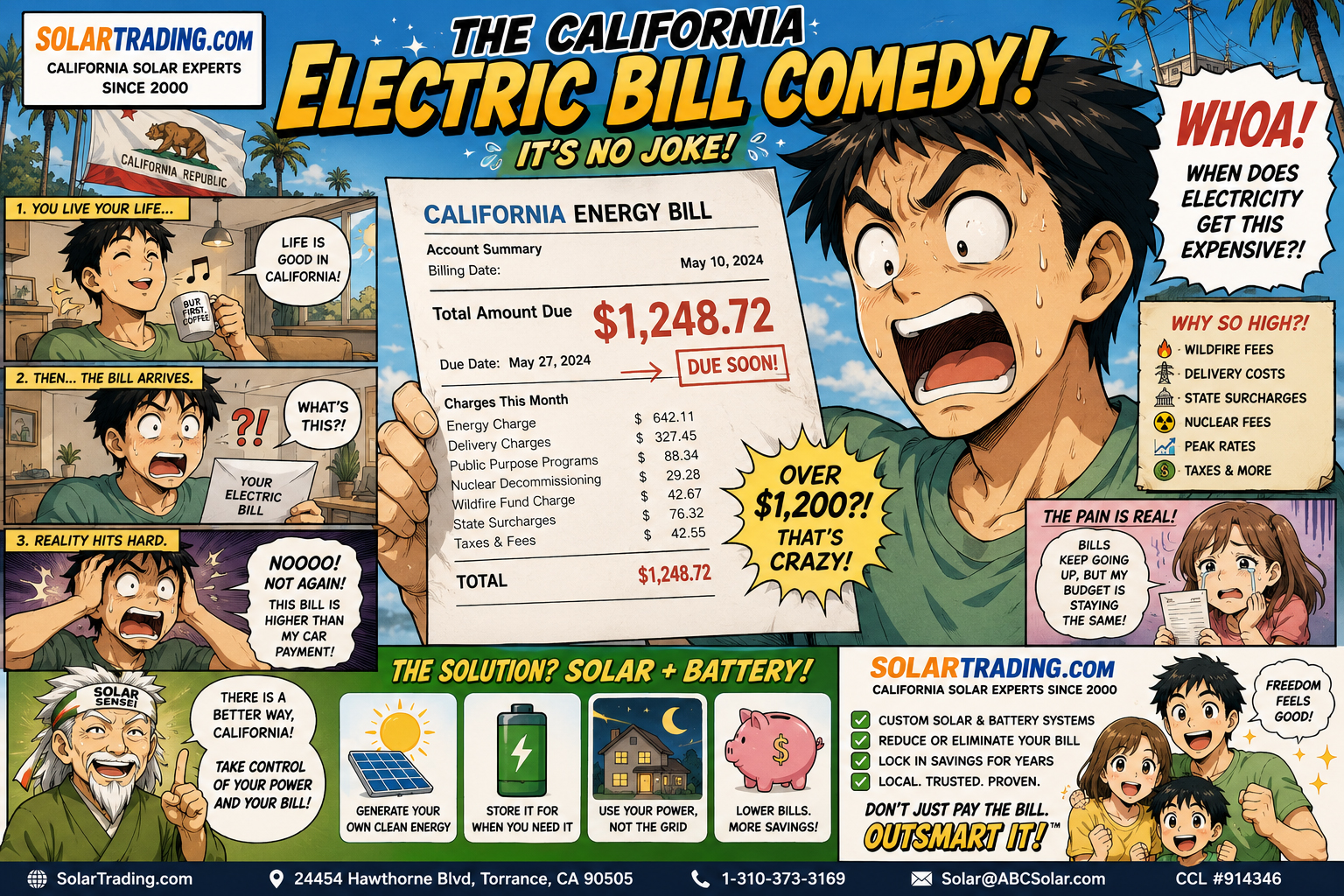
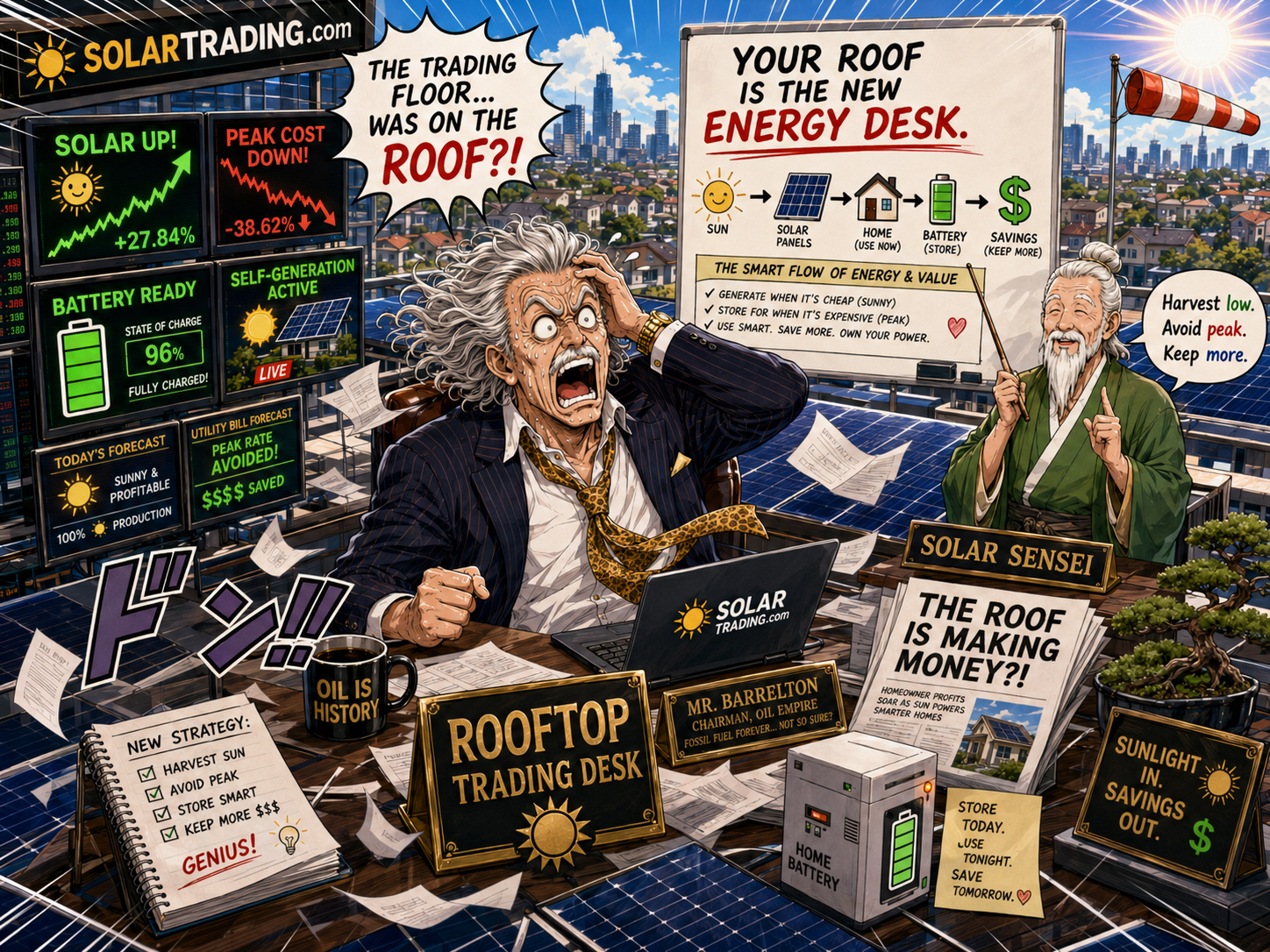
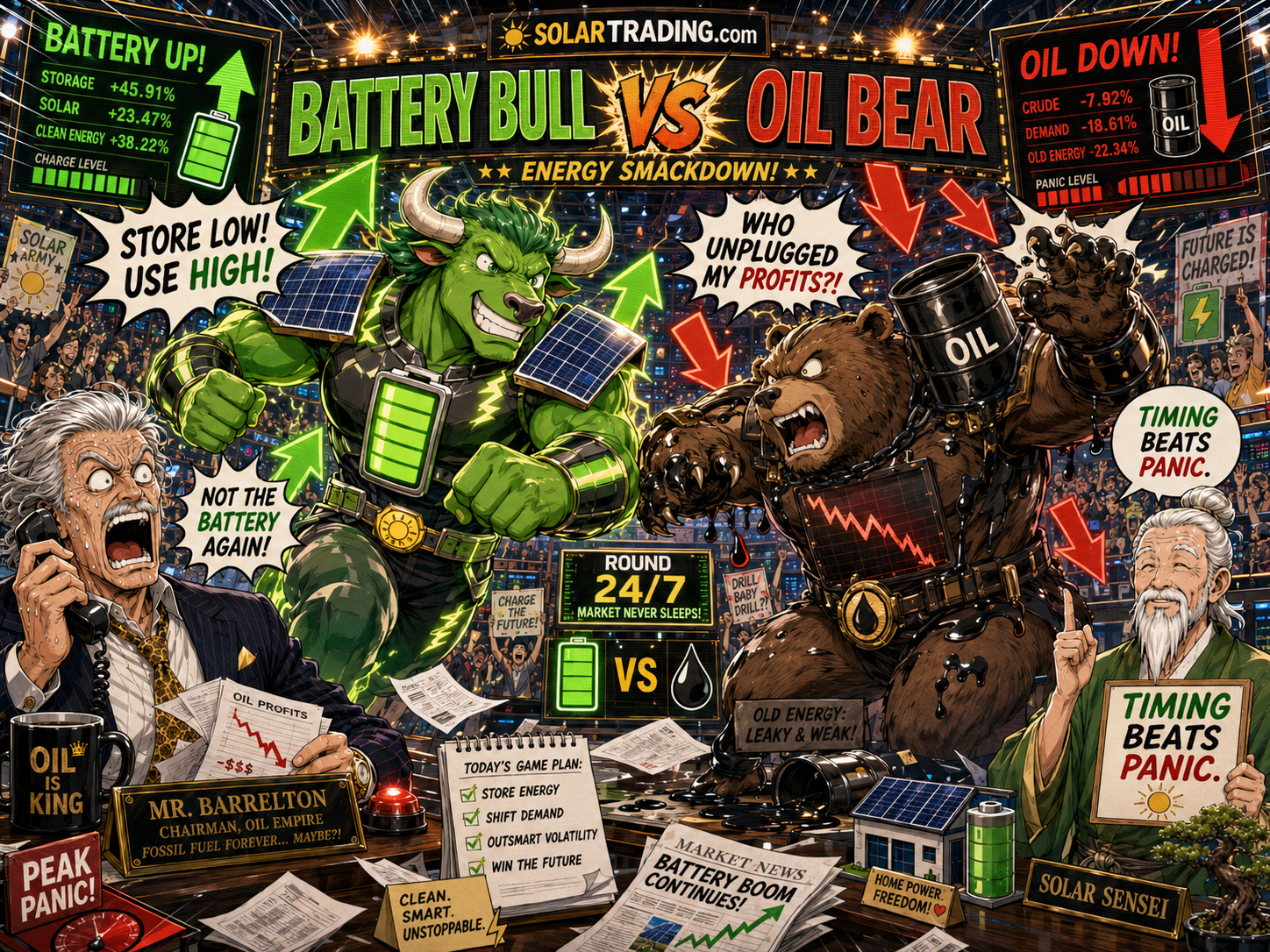
Mr. Barrelton survived the bill, met Madame Peak Rate, and watched Battery Bull fight Oil Bear. Now he must face the hardest enemy of all: basic units.

Episode 4

The old oil trader meets the units.

This episode slows the comedy down just long enough to make the bill understandable. Solar Sensei explains that power and energy are related, but not the same.

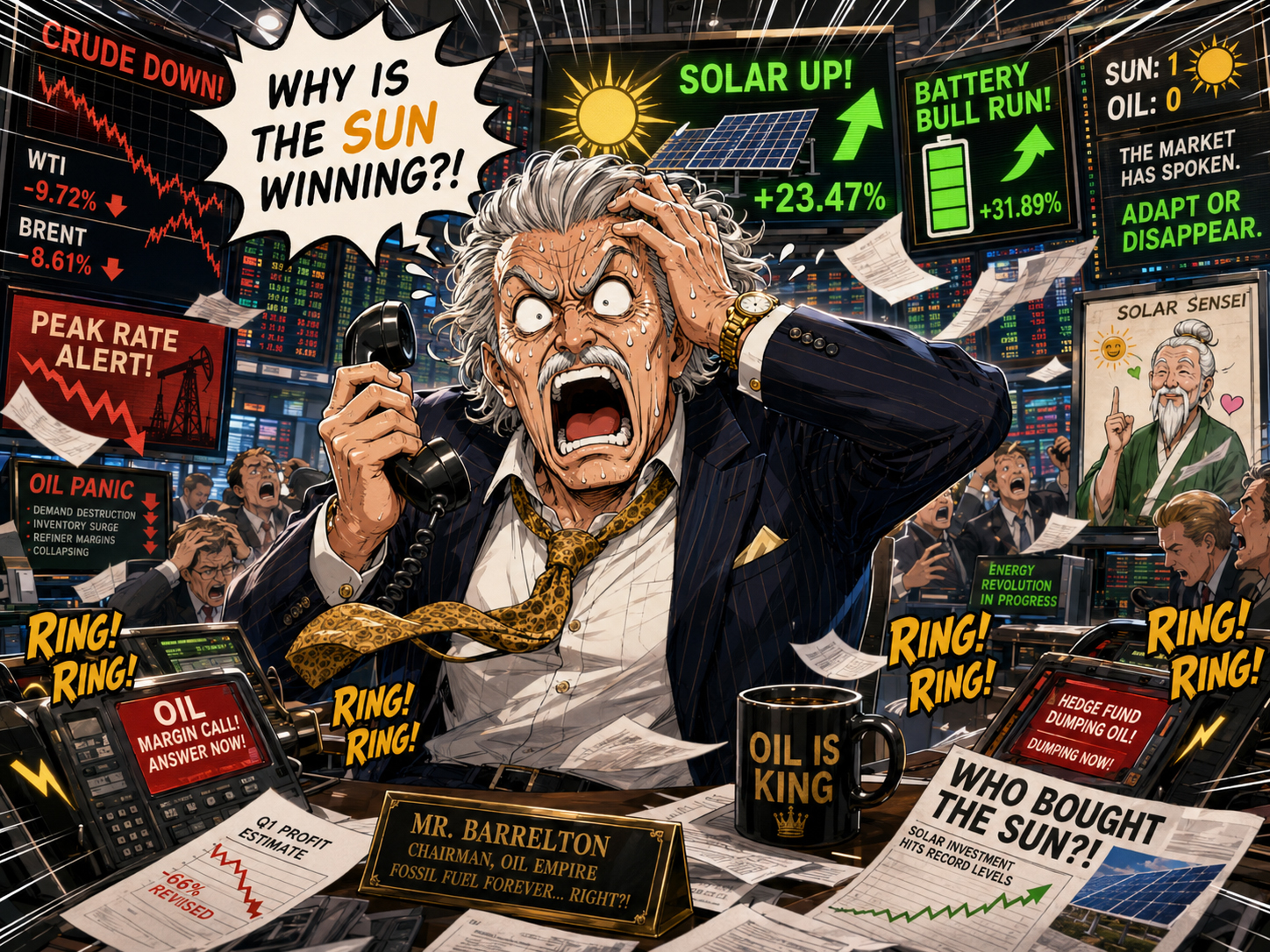
Mr. Barrelton panics on trading floor
Panel one

Mr. Barrelton demanded a ticker.

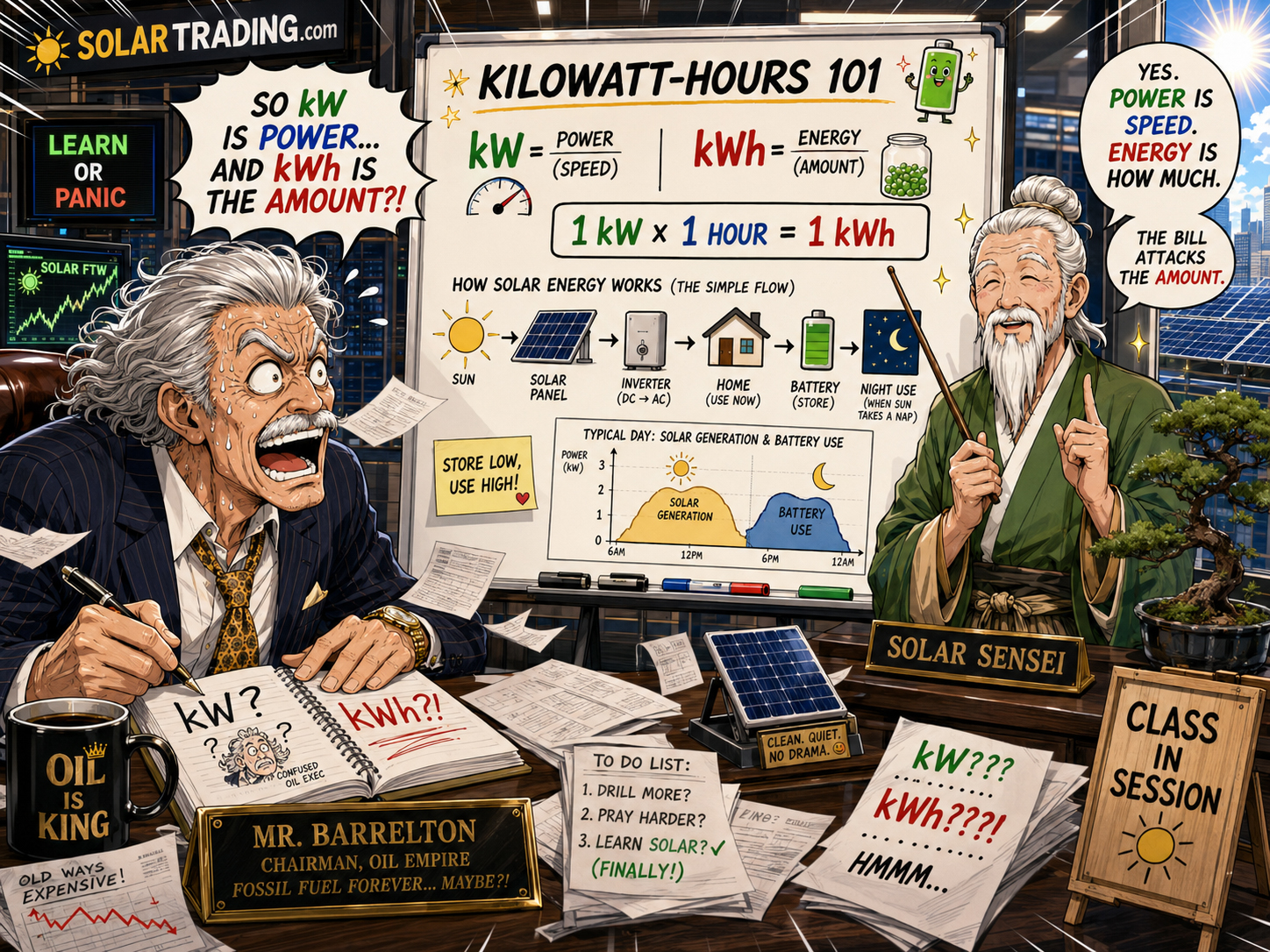
“Show me the market,” he said. “Show me the contract. Show me the barrel.” Solar Sensei erased the board and wrote two short terms.

“Before the market, we learn the units.”
Solar Sensei explains kW and kWh
Panel two

kW walked in first.

Solar Sensei drew a lightning bolt. “kW is power,” he said. “It is the rate. The speed. The size of the punch.”

“So kW is how hard the machine is yelling?” asked Mr. Barrelton. “Close enough,” said Solar Sensei.
California electric bill comedy
Panel three

Then kWh brought the bill.

Solar Sensei drew a clock next to the lightning bolt. “kWh is energy used over time. It is what the bill often counts.”

“So the punch plus the clock becomes the bruise?” asked Mr. Barrelton. “Now you are learning.”
Rooftop solar becomes the energy trading desk
Panel four

The roof became a classroom.

Solar production, home loads, EV charging, pool pumps, batteries, and peak rates all became easier to discuss once the units stopped fighting.

“The roof does not trade barrels,” Solar Sensei said. “It produces power over time.”

kW is power

kW = rate of power

Think of kW as how fast electricity is being used or produced at a moment. A large load has a higher power draw.

kWh is energy

kWh = kW × time

Think of kWh as the amount of energy used or produced over time. Bills, batteries, and solar production often need this number.

What Episode 4 teaches

Energy literacy comes before energy strategy.

SolarTrading.com uses comedy, but the unit lesson matters. If a customer confuses kW and kWh, solar, batteries, EV charging, demand charges, and backup expectations become much harder to understand.

Loads have power

Equipment has a power draw when it runs.

  • HVAC
  • Pool pumps
  • EV chargers
  • Motors and appliances

Bills count energy

Energy use over time is central to understanding many electric bills.

  • Monthly kWh
  • Usage patterns
  • Peak periods
  • Rate schedules

Batteries store energy

Batteries have capacity limits and power limits. Both matter.

  • Battery kWh
  • Inverter kW
  • Runtime
  • Critical loads
“If kW is the size of the punch,” said Solar Sensei, “kWh is how long the fight lasted.”

Episode 4 turns confusion into a chalkboard fight.

Solar Sensei’s lesson gives the SolarTrading.com story its foundation: once Mr. Barrelton understands kW and kWh, he can finally understand the bill, the battery, the roof, the charger, and the clock.

Continue the story

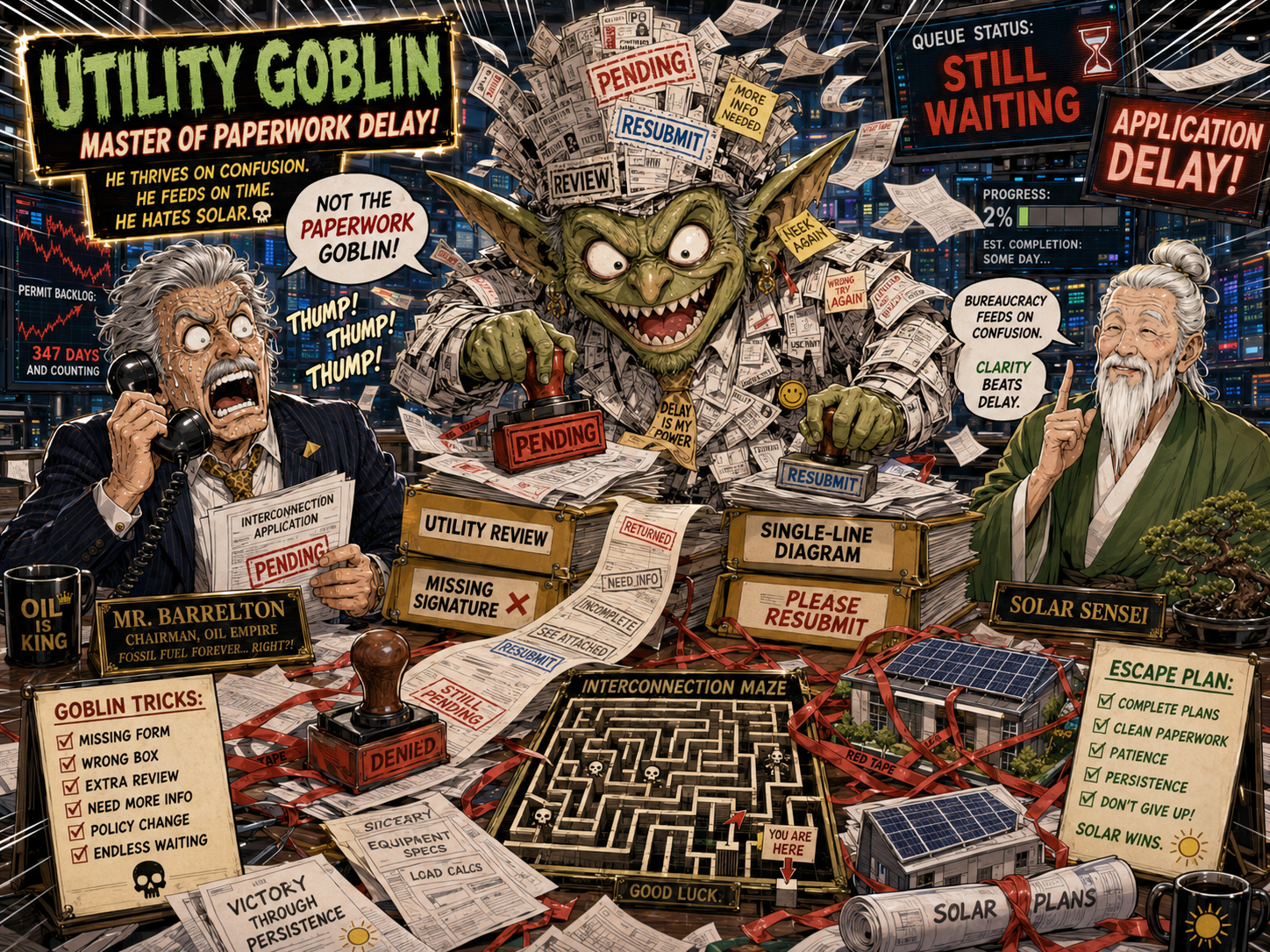
Next: the paperwork goblin appears.

Once Mr. Barrelton learns the units, he thinks the hard part is over. Then Utility Goblin opens the interconnection folder.

Important: SolarTrading.com is fictional manga satire and educational commentary. It is not financial advice, commodity trading advice, investment advice, tax advice, legal advice, utility-rate advice, engineering advice, emergency advice, EV charging advice, construction advice, or a guarantee of savings, performance, incentives, rate outcomes, interconnection approval, backup duration, or resilience. Solar and battery systems require professional design, load calculations, permitting, interconnection review, inspections, and code-compliant installation.